Tuesday, 28 October 2014
Saturday, 25 October 2014
Watching Friends Recover from Addiction on Facebook
(Thinkstock)
Through likes and comments, I’ve watched my hometown of Perry, Ohio, disappear into and come back from heroin addiction.
The U.S. is facing a massive heroin epidemic, and nowhere is it more evident than in Ohio, where fatal drug overdoses surpassed car crashes as the leading cause of accidental death in 2007, and increased by 60 percent from 2011 to 2012. Addicts in rehabilitation say heroin is the easiest drug to find. State legislators have called for Republican Gov. John Kasich to declare the prevalence of heroin a public-health emergency,
and in May he agreed to an Obamacare Medicaid expansion largely because
the state badly needed the federal help in funding treatment for heroin
addiction.
Perry, Ohio, is a microcosm of the epidemic, which is now infiltrating
upper-middle-class suburbs. Thirty minutes east of Cleveland, the town
of 1,500 has a median annual income $31,000 higher than that of Ohio
overall, but it also lacks opportunities for young adults to start their
lives. With the exception of the technical jobs offered by the nuclear
power plant — a definitive feature of the town — those without a college
degree travel to neighboring towns to work in retail or service
industries, and those with a degree rarely return. When I graduated high
school six years ago, most of the people in my class left Perry for
college, but many of those who stayed behind eventually turned to heroin
to cope with their anxieties about the future. Addiction to the drug is
growing most quickly
among people between the ages of 18 and 25, like the friends who fell
off my Facebook timeline as their lives became absorbed by their
addiction.
Over time, I forgot about many
of these people as I made new friends and experienced new things, and as
my Facebook feed became populated with photos of frat parties and
college football games. While I photo-bragged about crazy beer fests or
complained about all-nighters at the library, they posted less and less.
As they turned away from friends and family in real life for fear of
negative feedback, they turned away from Facebook, too. Richard Foster,
the executive vice president of treatment programs for Gateway
Rehabilitation Center in Pennsylvania, says active addicts are “not
talking to family and friends, and they’re not posting on social media
about their struggles.” In active addiction, he says, they are still in
denial, usually turning back to their friends, family, and social media
only when they are in stages of recovery and proud to share it.
Now, I’m seeing their names pop
up for the first time in years, with posts like “48 hours of sobriety
and all I’ve gotten is this lousy t-shirt,” and messages of
encouragement filling the comments. In contrast to the usual slew of
carefully choreographed photos of graduations, vacations, and weddings,
the raw honesty of these posts is striking. For heroin addicts, who must
cut ties with their communities of users as part of recovery, Facebook
is both a support system, connecting them back to relationships they had
before their addiction, and a venue that helps others understand the
fragility of the recovery process. For some in Perry who struggle with
heroin addiction, Facebook is a way to call for help and support. For
those of us who have left, their posts are stark reminders of the
reality of the problem ravaging our quaint hometown.
It was a post from a high school
class clown named Khari on Sept. 17 that alerted me that a friend had
passed away from an overdose that day. Comments like “Please get
healthy!” and “See? Don’t be messing with that stuff!” came flooding in
by the dozens. In high school, through puberty and awkward social
changes, Khari was funny, fearless, and blunt. When I called her after
seeing her post, she talked about the years since we graduated from high
school, the times she has been in and out of jail for heroin-related
crimes, and the friends and boyfriends who overdosed and died.
When I knew her at 19 years old,
Khari was against heroin; she says she was “one of those ignorant
profiling” people who chastised people who did it. But after seeing
friends leave town, she started feeling like she was missing out on life
and turned to heroin as a way to deal with the pains of the
quarter-life crisis.
She says that after the
most recent overdose death in Perry, the most difficult part for her was
seeing the online activity of old friends struggling to cope with the
pain of loss and the confusion that comes with addiction.
“I’ve been dealing with this on
and off for six years, so watching [people] I grew up with go through it
was really hard for me,” Khari says.
Emma is another Perry kid, one I
knew through mutual friends, who turned to heroin after high school.
She started smoking weed at age 12; by 15, she and her friends were
taking Oxycodone. At 17, her boyfriend taught her how to shoot up
heroin, saying that he was protecting her by showing her how to do it
safely. When her friends left for college, she moved into her
boyfriend’s grandmother’s basement, and she says that’s when things
turned for the worse. She felt like she didn’t have anything to look
forward to, that she was doing nothing with her life.
“I remember the day all my
friends left for college,” she says. “I was stuck in Perry and it just
made me want to get high even more.”
For the next six years, Emma was
in and out of relatives’ basements, friends’ couches, and rehab centers
in California and Florida for months at a time. Once, on a binge while
in treatment in California, she crashed the car of her employer into the
car of the owner of the rehab center. She was kicked out and moved back
to Perry to attempt to start her life over … again. She relapsed in 10
days, spending the next two months getting high and using up the entire
$6,000 she had saved.
Now seven months sober at a
different rehab center in California, she has been posting her progress
on Facebook routinely: “90 days sober!” received over 200 likes and
comments.
“There’s people [commenting]
that I haven’t seen in years, people that knew me from I was little,”
she says. “My mom’s friends are saying, ‘I remember when you were
little’ and saying that they are proud of me.” She says seeing people
from her childhood showing that they care helps keep her accountable for
her sobriety. The feedback confirms that a community cares about her
recovery. “It makes me feel really good, you know?”
Foster, the rehab-center
executive, says the shield of the screen may make people feel more
comfortable admitting they’ve been an addict than they would be in real
life. “It’s safer than going in to a room and saying ‘Hi, I’m Rich and
I’m an addict,’ ” he says.
But Angela, another classmate
who popped back on my timeline last year with an announcement of
newfound sobriety, is more skeptical of the role social media can play
in recovery. She says that while the encouragement from Facebook can be
uplifting, it doesn’t help people understand the intensity of addiction.
“Liking someone’s status about
clean time is a good way to remain supportive without too much risk,
especially for people you’ve been close to who have been hurt by broken
promises and relapse,” she says, but posting about her problems in the
throes of addiction would likely scare people away from reaching out.
“You can’t tell people, ‘I’m so sick, I’m dying, please give me money so
I don’t have to go … rob somebody.’ ”
At 16, Angela was smart, witty,
gorgeous, and always one step more mature than everyone else. She was
also a little harder than everyone else. She gave me my first shot of
moonshine in the stands at a football game before I knew what moonshine
was.
By senior year, she managed to
get a full academic scholarship to a private college in Ohio … and she
was shooting up heroin every other day. At high school graduation, where
she was summa cum laude, she missed walking across the stage because
she was dopesick — nauseated and vomiting from withdrawal — in the
bathroom. She tried to quit heroin before leaving for college, but ended
up going to school still addicted and dropping out before the first
quarter ended. The night she decided to quit college, she says, someone
from Perry paid her a visit and brought heroin.
“I just went to go on a dope run and I never came back,” she says. “It was always people from home.”
Ashamed of disappointing her
family, Angela says, she gave up completely on battling her addiction
after she dropped out. She became reclusive, lost friends. Her younger
sister shunned her completely. In the past six years, she has been to
rehab eight times and detox centers 20 times, and continues to struggle
with addiction while on house arrest today.
“I turn around and I think,
‘This isn’t what I planned for my life,’ ” she says, adding that she
sees posts from old friends about great life improvements, and she feels
like she missed out. “My friends have these great jobs, these great
lives, [they’re] buying houses and doing big things and I’m just
clueless,” she says. When I asked her what she sees on her Facebook
timeline from friends who do heroin, she says, “Mostly deaths.” But, she
says when she sees posts about sobriety and recovery from other
friends, it is motivating to pursue recovery and gives her hope that
it’s possible for her.
“You’ve seen that person down at
their worst, and then [when] you see them looking happy, it’s like, ‘I
can do this too,’ ” she says. “It’s like support groups, kind of, to see
that everyone is touched by it.”
Tuesday, 21 October 2014
$8.5 billion profit: Demand for iPhone 6 gives Apple record-breaking quarter
SAN FRANCISCO: Apple's biggest cash cow, the iPhone, is gaining weight.
Sales of iPhones, including the new, big-screen iPhone 6 models released last month, helped carry Apple to a record-breaking quarter and offset slowing sales of one of Apple's other major products, the iPad, the company announced Monday. Apple sold 39 million iPhones in the quarter that ended Sept. 27, a significant bump from the 33.8 million it sold in the same period last year.
Apple appears to be gorging on consumer demand for its smartphone. The company's $8.5 billion in net profit for its fiscal fourth quarter was 13.3 percent higher than the same quarter a year ago. Revenue over the quarter was $42.1 billion, up from $37.5 billion in the same period last year.
"Demand for the new iPhones has been staggering," Timothy D. Cook, Apple's chief executive, said in a financial earnings call with investors. He added: "I've never felt so great after a launch before."
But impolite as it may be to point out in the middle of such exuberant returns, those numbers - while enviable for most companies - do pose some risk for Apple, which gets about 70 percent of its profits from the iPhone, said Toni Sacconaghi, a financial analyst for Sanford C. Bernstein research.
As with any company increasingly reliant on a single product, should development of that product falter or if competition from companies like Samsung grows even tougher, Apple would be vulnerable.
"Increasingly Apple is the iPhone story," Sacconaghi said.
Shares of Apple rose about 1.5 percent to $101.25 in after-hours trading Monday.
Phone sales have steadily grown even though overall sales of smartphones are slowing in developed markets like the United States and parts of Europe. But Apple has aggressively fought that trend. Last year, it for the first time released two new iPhone models instead of just one. Last month,Apple again released two new iPhones, this time with bigger screens.
The larger iPhone 6 and iPhone 6 Plus smartphones drew a strong reaction early. In the first weekend that the new iPhones went on sale in September, Apple sold 10 million of the devices, up from the 9 million new iPhones sold last year on their opening weekend.
In addition, Apple has teamed up with phone carriers in important markets, particularly China.
Apple's quarterly revenue beat Wall Street expectations for $39.9 billion, according to a survey of analysts by Thomson Reuters. Apple's $1.42 a share profit also exceeded analysts' expectations for $1.31 a share. For Apple's full 2014 fiscal year, profit was $39.5 billion on revenue of $182.8 billion.
Now for the bad news: The company on Monday said it sold 12.3 million iPads over the quarter, down from 14 million in the same quarter last year. The company's iPad sales were down in the previous quarter, too.
Apple also said it sold 5.5 million Macs over the quarter, a major improvement from the 4.6 million it sold in the same period last year. But the Mac is still small fry compared with the iPhone.
In the earnings call, Cook said Apple continued to be very bullish about the iPad's prospects. He noted that over four years, Apple had sold about 230 million iPads, which was double the number of iPhones it sold over the first four years.
Sales of iPhones, including the new, big-screen iPhone 6 models released last month, helped carry Apple to a record-breaking quarter and offset slowing sales of one of Apple's other major products, the iPad, the company announced Monday. Apple sold 39 million iPhones in the quarter that ended Sept. 27, a significant bump from the 33.8 million it sold in the same period last year.
Apple appears to be gorging on consumer demand for its smartphone. The company's $8.5 billion in net profit for its fiscal fourth quarter was 13.3 percent higher than the same quarter a year ago. Revenue over the quarter was $42.1 billion, up from $37.5 billion in the same period last year.
"Demand for the new iPhones has been staggering," Timothy D. Cook, Apple's chief executive, said in a financial earnings call with investors. He added: "I've never felt so great after a launch before."
But impolite as it may be to point out in the middle of such exuberant returns, those numbers - while enviable for most companies - do pose some risk for Apple, which gets about 70 percent of its profits from the iPhone, said Toni Sacconaghi, a financial analyst for Sanford C. Bernstein research.
As with any company increasingly reliant on a single product, should development of that product falter or if competition from companies like Samsung grows even tougher, Apple would be vulnerable.
"Increasingly Apple is the iPhone story," Sacconaghi said.
Shares of Apple rose about 1.5 percent to $101.25 in after-hours trading Monday.
Phone sales have steadily grown even though overall sales of smartphones are slowing in developed markets like the United States and parts of Europe. But Apple has aggressively fought that trend. Last year, it for the first time released two new iPhone models instead of just one. Last month,Apple again released two new iPhones, this time with bigger screens.
The larger iPhone 6 and iPhone 6 Plus smartphones drew a strong reaction early. In the first weekend that the new iPhones went on sale in September, Apple sold 10 million of the devices, up from the 9 million new iPhones sold last year on their opening weekend.
In addition, Apple has teamed up with phone carriers in important markets, particularly China.
Apple's quarterly revenue beat Wall Street expectations for $39.9 billion, according to a survey of analysts by Thomson Reuters. Apple's $1.42 a share profit also exceeded analysts' expectations for $1.31 a share. For Apple's full 2014 fiscal year, profit was $39.5 billion on revenue of $182.8 billion.
Now for the bad news: The company on Monday said it sold 12.3 million iPads over the quarter, down from 14 million in the same quarter last year. The company's iPad sales were down in the previous quarter, too.
Apple also said it sold 5.5 million Macs over the quarter, a major improvement from the 4.6 million it sold in the same period last year. But the Mac is still small fry compared with the iPhone.
In the earnings call, Cook said Apple continued to be very bullish about the iPad's prospects. He noted that over four years, Apple had sold about 230 million iPads, which was double the number of iPhones it sold over the first four years.
ectations
for $39.9 billion, according to a survey of analysts by Thomson
Reuters. Apple's $1.42 a share profit also exceeded analysts'
expectations for $1.31 a share. For Apple's full 2014 fiscal year,
profit was $39.5 billion on revenue of $182.8 billion.
Now for the bad news: The company on Monday said it sold 12.3 million iPads over the quarter, down from 14 million in the same quarter last year. The company's iPad sales were down in the previous quarter, too.
efore."
But impolite as it may be to point out in the middle of such exuberant returns, those numbers - while enviable for most companies - do pose some risk for Apple, which gets about 70 percent of its profits from the iPhone, said Toni Sacconaghi, a financial analyst for Sanford C. Bernstein research.
As with any company increasingly reliant on a single product, should development of that product falter or if competition from companies like Samsung grows even tougher, Appl ..
But impolite as it may be to point out in the middle of such exuberant returns, those numbers - while enviable for most companies - do pose some risk for Apple, which gets about 70 percent of its profits from the iPhone, said Toni Sacconaghi, a financial analyst for Sanford C. Bernstein research.
As with any company increasingly reliant on a single product, should development of that product falter or if competition from companies like Samsung grows even tougher, Appl ..
efore."
But impolite as it may be to point out in the middle of such exuberant returns, those numbers - while enviable for most companies - do pose some risk for Apple, which gets about 70 percent of its profits from the iPhone, said Toni Sacconaghi, a financial analyst for Sanford C. Bernstein research.
As with any company increasingly reliant on a single product, should development of that product falter or if competition from companies like Samsung grows even tougher, Appl ..
But impolite as it may be to point out in the middle of such exuberant returns, those numbers - while enviable for most companies - do pose some risk for Apple, which gets about 70 percent of its profits from the iPhone, said Toni Sacconaghi, a financial analyst for Sanford C. Bernstein research.
As with any company increasingly reliant on a single product, should development of that product falter or if competition from companies like Samsung grows even tougher, Appl ..
Facebook Introducing Safety Check
In times of disaster or crisis, people turn to Facebook to check on loved ones and get updates. It is in these moments that communication is most critical both for people in the affected areas and for their friends and families anxious for news.
We want to provide a helpful tool that people can use when major disasters strike, so we’ve created Safety Check – a simple and easy way to say you’re safe and check on others.
During a major disaster, Safety Check will help you:
- Let friends and family know you’re safe
- Check on others in the affected area
- Mark your friends as safe
The 2011 earthquake and tsunami in Japan was devastating. According to the Japanese Red Cross, more than 12.5 million people were affected nationwide, and more than 400,000 people were evacuated. During that crisis we saw how people used technology and social media to stay connected with those they cared about.
Our engineers in Japan took the first step toward creating a product to improve the experience of reconnecting after a disaster. They built the Disaster Message Board to make it easier to communicate with others. They launched a test of the tool a year later and the response was overwhelming.
Unfortunately, these kinds of disasters happen all too frequently. Each time, we see people, relief organizations and first responders turn to Facebook in the aftermath of a major natural disaster.
These events have taught us a lot about how people use Facebook during disasters and we were personally inspired to continue work on the Disaster Message Board to incorporate what we’ve learned. This project soon became Safety Check, which will be available globally on Android, iOS, feature phones and desktop.
The team set out to create a simple and easy-to-use tool that allows people to connect with their network of friends and family when it matters most.
Here’s how it works:
When the tool is activated after a natural disaster and if you’re in the affected area, you’ll receive a Facebook notification asking if you’re safe.
We’ll determine your location by looking at the city you have listed in your profile, your last location if you’ve opted in to the Nearby Friends product, and the city where you are using the internet.

If we get your location wrong, you can mark that you’re outside the affected area.
If you’re safe, you can select “I’m Safe” and a notification and News Feed story will be generated with your update. Your friends can also mark you as safe.

If you have friends in the area of a natural disaster and the tool has been activated, you will receive a notification about those friends that have marked themselves as safe. Clicking on this notification will take you to the Safety Check bookmark that will show you a list of their updates.
If you’re ever in a situation that would require you to use Safety Check, we hope it’s a tool that helps you stay connected to those you care about, and gives you the comfort of knowing your loved ones are safe.
Friday, 10 October 2014
Tuesday, 7 October 2014
Facebook Closes WhatsApp Acquisition, Jan Koum To Match Zuckerberg’s $1 Annual Salary
Facebook is now the legal owner of WhatsApp, following a filing made with the SEC today. This is the final step in a process begun when Facebook announced its intent to acquire the messaging company in February of this year. The Facebook deal passed its final regulatory hurdle when it received EU approval to go ahead with the acquisition of WhatsApp last week.
In the filing, the company details the awarding of 177,760,669 shares of Facebook’s Class A common stock and $4.59 billion to WhatsApp stakeholders, plus 45,941,775 in restricted stock to WhatsApp employees to complete the deal. Koum will join Facebook’s board, and will also match Zuckerberg’s annual base salary of $1, without eligibility for the company’s bonus plan, though he does get a signing bonus of 24,853,468 restricted stock units as incentive for joining. Per the filing, Koum is joining Facebook with no fixed term of employment as part of the arrangement, but all indicators are that he wants to stick around to continue to build WhatsApp as a separate brand under the growing Facebook umbrella
Sunday, 5 October 2014
8 Tips to Improve Your WiFi Network Performance
(Thinkstock)
Odds are pretty good you loaded
this page over a WiFi network — or, as it is better known in my house,
that $#&*#$!! WiFi network. That’s because our wireless network
always chooses the worst possible time to crap out, like when we’re
getting to the thrilling climax of House of Cards on Netflix.
Still, it’s better than it used
to be. I’ve learned a few WiFi tricks over the years, and asked some
folks who know more than I do for a few more. If you’re happy with your
current WiFi setup, that’s fine. But if you want faster speeds, more
reliable performance, or to just get more use out of your network, try
the following eight tips.
1. Get up to speed.First,
let’s go over some basics. (If you’re already a WiFi wonk, you can skip
this paragraph.) WiFi does not actually mean “wireless fidelity.” Its
real name is a number: 802.11, the technical standard
for wireless networks first established by the Institute of Electrical
and Electronics Engineers (IEEE) in 1997. That number is always
accompanied by a letter (like a, b, g, or n) that indicates which
version it is. Generally speaking, each new version of 802.11 is faster
and more reliable than the last, but “higher” letters don’t always mean
faster speed. For example, 802.11a is faster than 802.11b. Go figure.
2. Prepare to pony up.The
newest WiFi standard, 802.11ac, is roughly three times faster than the
previous champ, 802.11n. In geek-speak, each 802.11ac antenna can move
up to 1,300 megabits of data per second (vs. a max of roughly 450
megabits for n). So I’ll just get this out of the way: The easiest and
fastest way to get more performance out of your WiFi network is to buy a
new 802.11ac router.
That’s especially true if you
haven’t bought a router recently. Technology has changed a lot over the
past two years, and devices built to work with 802.11ac (like the new iPhone 6 and 6 Plus) are coming out every day.

The
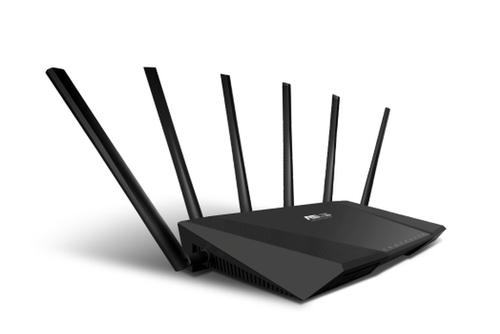
ASUS RT-AC3200 features six — count ’em, six — antennas, for a maximum
theoretical throughput of 3,200 megabits per second. (ASUS)
Older phones and laptops will
work fine with newer routers, though they won’t be able to take
advantage of the speed or other new features.
But the best 802.11ac routers
aren’t cheap. You can expect to drop from $100 to $300 on a new one.
(Or, if you’re a T-Mobile customer, you can get a free Personal CellSpot that’s really an ASUS ac router.)
But even with an older router, there are things you can do to squeeze better performance out of your existing gear.
3. Find the right spot.Start
by making sure you’ve put the router in the optimal place. Remember,
WiFi signals hate water. They’re also not too crazy about metal, glass,
brick, insulation, and human bodies; all these materials can impede the
signal, notes Sandeep Harpalani, director of product marketing for
router maker NETGEAR.
For the fastest, most reliable connection, put your router in an open
space, as centrally located and as high off the floor as you can.
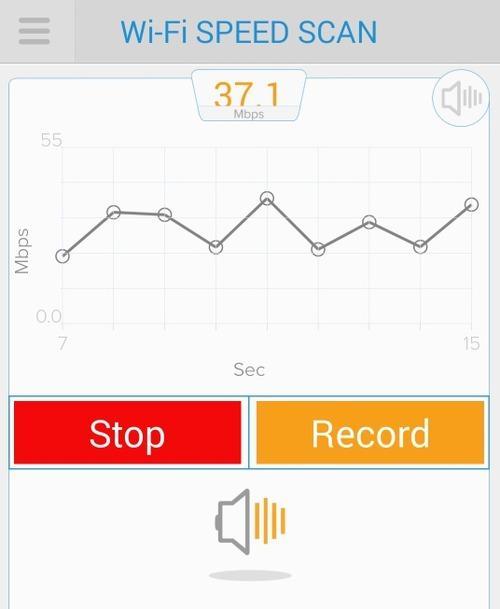
4. Measure your signal strength.Just a couple of feet can make the difference between strong and wimpy WiFi reception. Mobile apps like Assia’s Cloudcheck or Amped Wireless’s Wi-Fi Analytics Tool let you walk through your home and identify dead spots, so you can figure out the best places to put your WiFi devices.

5. Messing with the antennas may help.If
your router has adjustable antennas, changing their angle can redirect
the signal and cover dead spots. Feeling crafty? Freeantennas.com offers
instructions on how to make a parabolic reflector
out of card stock and attach it to the antenna to boost the signal
(although a directed antenna like that will make the sweet spot
extremely narrow.)
If you have a new 802.11ac router, though, you probably won’t need this. They use a technique called beamforming
to focus the signal toward devices on the edge of your network, notes
Richard Najarian, senior director of wireless connectivity for Broadcom, which makes chipsets for wireless routers and other devices.
6. Try changing the channel.
Older WiFi routers are prone to interference from other devices operating in the same spectrum — which sadly includes microwave ovens, many cordless phones, Bluetooth headsets, or your neighbors’ wireless networks. Usually the router’s default settings work fine, but if your wireless signal seems flaky, you can dial up your router’s administration page and change the channel to see if things improve.
Mobile apps like WiEye for Android
let you view all the wireless nets nearby to see what channels they’re
on. (Sorry, iPhone fans — Apple has banished WiFi scanners from the
iTunes Store; you’ll have to rely on a desktop app like WiFi Scanner for Mac or WiFi Channel Scanner for Windows.)
Most routers can use 11 channels
(specific radio frequencies) and are set at channel 1, 6, or 11 by
default, because these frequencies don’t overlap with one another. (So
if your neighbor’s network is broadcasting on 6, set yours at 1 or 11 to
avoid interference.) Routers that operate in the 5 GHz range (802.11a,
n, and ac) broadcast across 23 channels and are less prone to
interference, so there’s less need to futz with the channel settings.
You
can go into your router’s Web control panel to change channels; you may
also be able to use a router-specific app like NETGEAR genie or Cisco
Connect Express.
7. Use both bands.
Many routers have radios that operate on two frequencies, roughly 2.4 GHz and 5 GHz (each channel works on a specific frequency near that). So you can have two separate networks running at the same time, one for devices that access WiFi at the lower frequency and another for those that connect at 5 GHz. The higher band is less crowded and better for high-bandwidth uses like streaming video, says Joseph Yarak, director of marketing for Quantenna Communications, a WiFi chipset maker.
8. Use wires when possible.As
fast as the newest WiFi standard is, a wireless connection still isn’t
as fast or reliable as a standard wired one. When possible, connect
bandwidth-hungry devices that stay in one location — like your Roku
streaming media boxes or Xbox gaming consoles — directly to your router
via networking cable, and save the wireless connections for the stuff
that moves around.
Questions, complaints, kudos? Email Dan Tynan at ModFamily1@yahoo.com.